
For years, the energy transition has come with a catch: the cheapest ways to take part have generally required you to own the right bit of property.
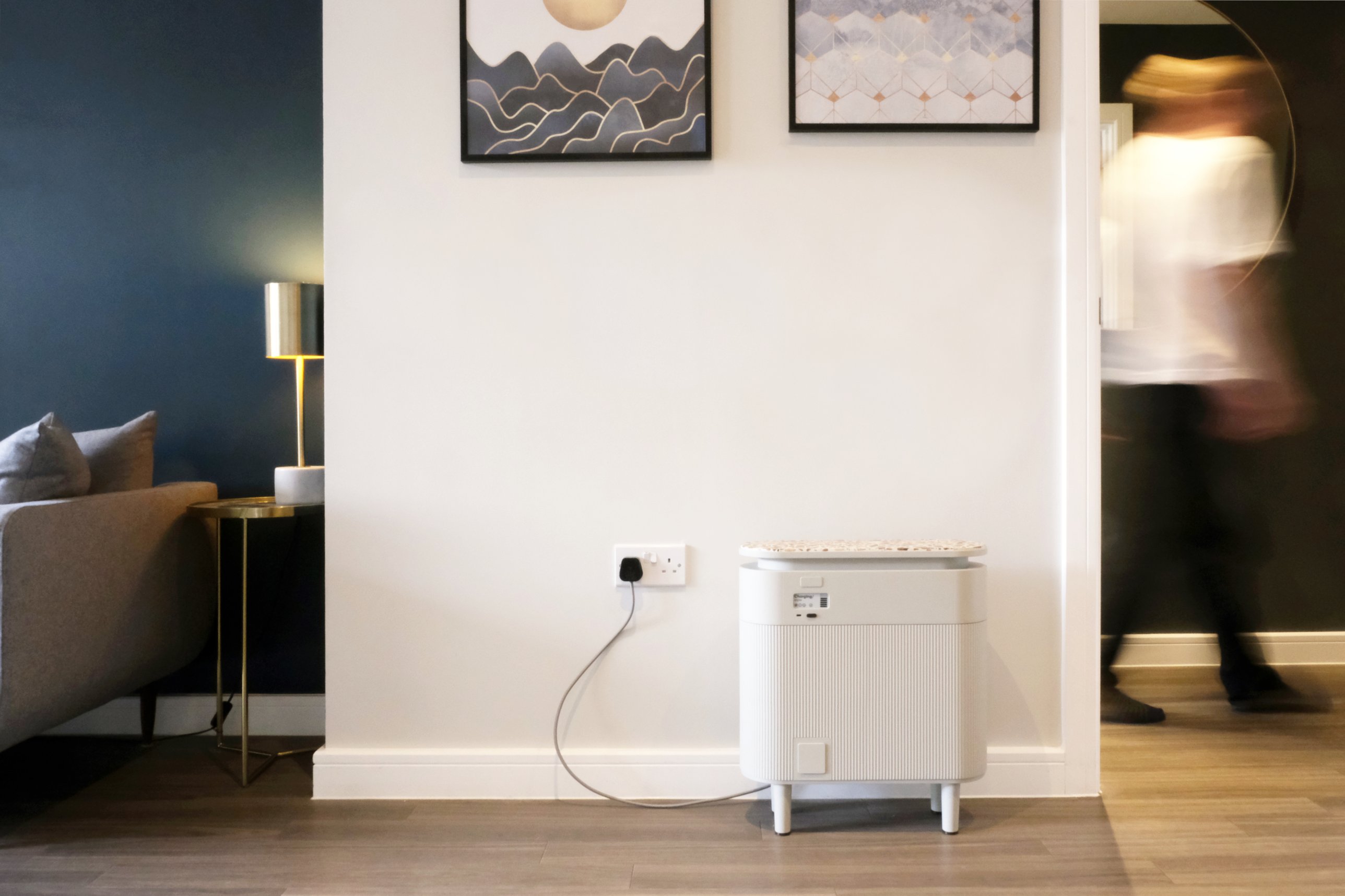
Solar panels need a roof. Home batteries need somewhere to install them, an electrician to connect them, and several thousand pounds to buy the kit. That works if you own a house. It is far less useful if you live in a flat, rent your home, or simply cannot spare thousands of pounds upfront. Plug-in batteries could change that, because the idea behind them is genuinely simple: buy electricity when it is cheap, store it, and use it later when electricity is expensive, all through an ordinary socket rather than a rewired consumer unit. No electrician and no rewiring.
Earlier this year, government made real progress on exactly this kind of technology, though the version it approved generates power rather than storing it. Plug-in solar, a small panel that connects straight into a normal socket instead of being wired into the consumer unit the way a full rooftop array would be, was cleared for sale from 27 August. DESNZ estimates savings of up to around £100 a year from an 800 watt kit. It will not replace a full solar installation, and output drops away exactly when bills are highest through autumn and winter, but it gave the third of UK households who rent or live in flats something they have not had before: an actual lever to pull on their own bill. Germany has had around a million of these systems running for a decade, so Britain is, once again, catching up rather than leading.
Batteries were left out of that decision. DESNZ’s consultation response records that a majority of respondents asked why, arguing that a battery lets a household keep using cheap or self-generated electricity after the sun goes down, when much of the benefit of solar would otherwise be lost. The department’s answer amounted to a promise to keep gathering evidence, with no date attached.
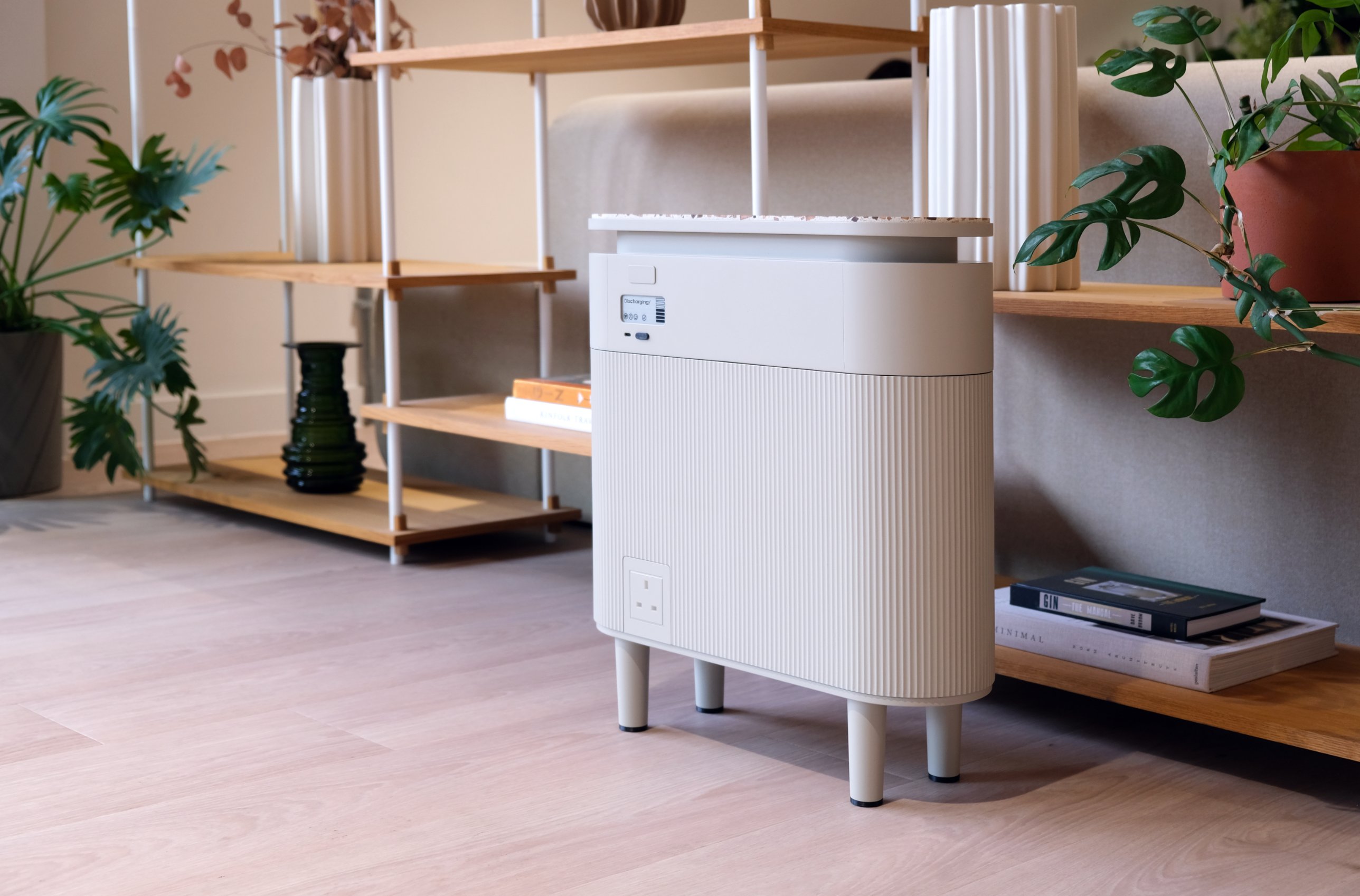
That caution is the right instinct, and it is worth saying plainly: nothing here should move faster than the safety case allows. Existing guidance for domestic batteries has largely been built around systems that are professionally installed, often outdoors. A plug-in battery is a different proposition, designed to sit on a shelf in an ordinary room, plugged into the same socket as anything else in the house, installed by whoever bought it. The Energy Storage Association has broadly welcomed DESNZ’s approach while pointing to exactly this distinction: a safety framework built for a permanently installed home battery cannot simply be assumed to fit a new category of consumer product. Getting that framework right comes first, and households are entitled to know when to expect a decision.
That is precisely what the coming DESNZ study is trying to establish. Put out to tender this summer, it will review battery products already sold internationally, then laboratory-test a handful of real products, including deliberate misuse and fire testing. A second phase, budget permitting, would extend that fire testing to home batteries more broadly. It is a properly rigorous piece of work. The published tender notice gives an estimated contract start of 9 November 2026 and an estimated end of 31 March 2028, and some industry commentators have read that as a sign the legal route for batteries might not land until as late as 2028.
For households, a legal route that arrives in 2028 means at least one more winter of struggling with bills and limited options to help. Ofgem’s price cap rose by 4% on 1 October, and Cornwall Insight forecasts a further rise of 16% in January. The temporary zero rate of VAT on domestic electricity helps, but it is worth around £45 a year to a typical household and runs only until 31 March 2027. These plug-in technologies are meant to reach people who have been shut out of cheaper, cleaner energy because of the kind of home they live in, and a wait until 2028 is hard to square with that.
Government has already shown, with plug-in solar, that it can build a proportionate route to market once the evidence exists, much of it borrowed from Germany’s decade of experience. Batteries do not have that borrowed evidence base yet, at least not one DESNZ has said it is relying on, which is exactly why this study is the piece to watch. If we want households to benefit from cheaper electricity, use more of the power generated by renewables, and become more flexible in how they consume energy, the transition cannot keep being designed around the assumption that everyone owns a detached house with a south-facing roof and several thousand pounds spare. Plug-in batteries are smaller, cheaper, and considerably easier to adopt than anything that has come before them, provided the safety work behind them is done properly. The question is whether the evidence can be gathered at a pace that matches the size of the opportunity.
I put five questions to Rob Hallifax at Windfall Energy to find out where the technology and the evidence actually stand.

Question one. Can you tell us more about Windfall Energy and what you’re building?
My co-founder and I both live in flats in London and were frustrated by increasing bills and the lack of cleantech options for people like us. We worked through several ideas before deciding a small, easy-to-install home battery was what we should build.
Fundamentally the premise is simple: the Windfall Battery reduces energy bills by charging up whenever the grid is cheapest and then storing that energy to supply it back to the home during peak times.
By making a product that is super easy to set up and use, we can see millions of similar batteries being installed in homes in the UK and beyond. And then in addition to direct cost savings for consumers, the batteries can be used in aggregate to help balance the grid and offer value to energy retailers, DNOs and the energy system as a whole.
Question two. You suggested a UK route “later in 2026” back in May. Given DESNZ’s own timeline, and industry estimates putting a finished framework closer to 2027 or 2028, does that date still hold, and what would need to happen for it to?
We believe 2027 is realistic. The electrical safety assessment already carried out for plug-in solar applies equally to plug-in batteries – in both cases it’s technically a DC-AC inverter connecting to the home whether it’s a solar panel or a battery power behind it.
As with plug-in solar we expect to see an 800 W limit for how much electricity a plug-in battery can feed back into the home. This restriction goes a long way to mitigating any risks to do with domestic wiring. A kettle, for example, can draw more than three times that amount of power.
So, the remaining work on plug-in battery regulations is largely to do with safety of the battery component itself.
Question three. Existing safety thinking assumes outdoor, professionally installed batteries. Yours is designed to sit indoors and be installed by the customer. What evidence is Windfall bringing to the safety study on that specific point?
Safety is something we take very seriously. In many ways we take consumer battery safety for granted these days. In every home there are dozens of lithium batteries powering all sorts of static and portable devices, albeit of a smaller capacity.
For our product, the battery cells we use are LFP (Lithium Iron Phosphate), and these offer a higher inherent chemical safety margin than NMC (Nickel Manganese Cobalt) batteries, primarily due to a reduced risk of thermal runaway.
An advantage of batteries being installed indoors is the stable environment they operate in. We monitor temperature and other parameters so that at any time the battery can shut down if there are any warning signs.
Compared with plug-in solar, one area where batteries are simpler from a safety point of view is the physical installation. Solar panels must be correctly mounted somewhere and the cables routed to a socket. A battery is simply placed on the floor and plugged in. It also doesn’t get knocked around like an ebike battery for example.
A critical thing for us is working with a reputable supplier using quality components. We’re not trying to make the cheapest plug-in battery – we are building a reliable product designed to operate safely and efficiently for a decade and more. Our supplier is a top-tier battery producer working to the latest safety standards and manufacturing quality control.
Question four. Germany’s decade of plug-in solar data helped build the case for allowing plug-in solar in Britain. Is there an equivalent evidence base for batteries, or is DESNZ working with considerably less this time?
There have been studies in Germany looking at batteries compared to other household appliances, and the safety risks are similar to something like a washing machine. This isn’t necessarily specific to plug-in batteries, but the evidence is building up for all types of residential batteries.
These scientific findings directly shaped Germany’s stringent regulatory frameworks for stationary lithium-ion battery storage systems.
There is also evidence showing that incidents with ebikes etc are more often than not caused by substandard products or when products become damaged, faulty or are charged incorrectly. We welcome clear regulations so that consumers know that the products they’re buying are safe.
Question five. If you could hand DESNZ one piece of evidence tomorrow that would most help it complete its safety study, what would it be?
A key point here is that there is also a risk of inaction and delay. As happened in Germany, when people realise this is a way of saving money these products will be bought online regardless of rules and regulations. The adoption of plug-in energy devices in Germany happened really fast and that’s likely to happen here too.
The battery safety study doesn’t need to start from scratch. DESNZ can build on existing regulations for larger batteries, such as PAS 63100:2024. Evidence can be gathered from the many existing batteries installed over the last few years within these guidelines.
The supplier we’re working with is a large and reputable battery manufacturer with a history of millions of batteries in use with no incidents. We can continue working with DESNZ to share some of that historical data and show them all the safety design features and quality controls that are built into our product and manufacturing processes.
For something as simple as plugging a battery into a socket, there is a surprising amount riding on the answer.